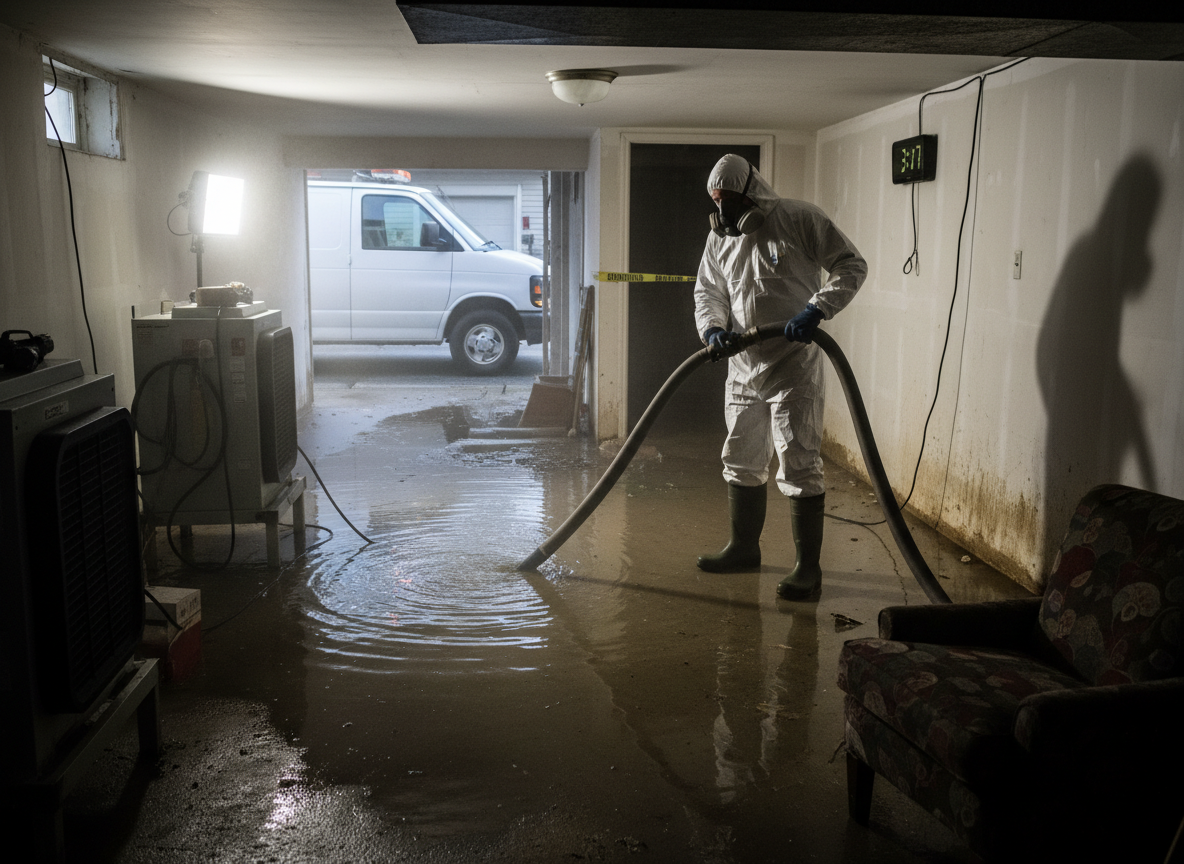
Sugarloaf sits in a true mountain climate where winter snow loads on roofs and freezing temperatures in older cabins frequently lead to pipe bursts and ice dam leaks. When water escapes under floorboards or into crawl spaces, the cold slows natural drying and lets moisture travel along the sloped terrain toward foundations near the San Bernardino National Forest boundary. A 24-hour response prevents hidden saturation from reaching insulation and subfloors before spring thaw accelerates mold risk.
Homes in Sugarloaf and nearby Running Springs are often built on uneven lots with limited road access, so extraction equipment must be carried in by hand or small carts. San Bernardino County building practices in these areas commonly include raised wood floors over dirt crawl spaces that trap water against sill plates. Technicians must map moisture migration through these voids quickly, using thermal imaging to locate pockets that standard fans miss in the dense forest microclimate.
Once water is removed, drying protocols change with elevation and daily temperature swings between warm afternoons and freezing nights. Dehumidifiers run longer cycles to pull residual moisture from log or cedar siding common in the area. Failure to account for these swings leaves hidden damp spots that later cause cupping in hardwood floors or delamination in subfloors during the next cold snap.
Winter Pipe Risks
Cold snaps in Sugarloaf routinely drop below freezing at night even after mild days, so uninsulated supply lines in crawl spaces freeze and split. Homeowners often discover the damage only after snowmelt raises groundwater levels, pushing water through foundation cracks. Immediate 24-hour extraction followed by targeted drying along the slope prevents the water from traveling under the entire structure toward lower lots near Big Bear Lake.
Technician insight
In Sugarloaf, the thing that catches most people out with 24-hour water restoration near me is how spring snowmelt from the San Bernardino National Forest slopes keeps feeding water into crawl spaces long after the initial leak is fixed, especially in cabins built before modern insulation standards.
Frozen Supply Line in Sugarloaf Cabin
A cold night burst a pipe under the floor of a cabin on Maple Lane. Water had already wicked into insulation along the slope toward the forest edge. Crew extracted standing water, placed drying equipment rated for nightly freezes, and returned each day to adjust until readings held steady. The home stayed dry through the next thaw without further intrusion.
How it works
- 1
Emergency Dispatch
Answer the call at any hour and send a crew from the Sugarloaf base within the hour.
- 2
On-Site Assessment
Walk the property, check crawl spaces and attics for hidden moisture using meters suited to mountain homes.
- 3
Water Extraction
Remove standing water and pull saturated materials before snowmelt adds more volume.
- 4
Drying and Monitoring
Set equipment and return daily to adjust for temperature swings until readings stabilize.
- 5
Final Walk-Through
Confirm all affected areas are dry and discuss any needed repairs with the homeowner.
Pricing
Upfront quotes after on-site inspection account for access challenges on sloped lots and extra drying time needed in cold weather.