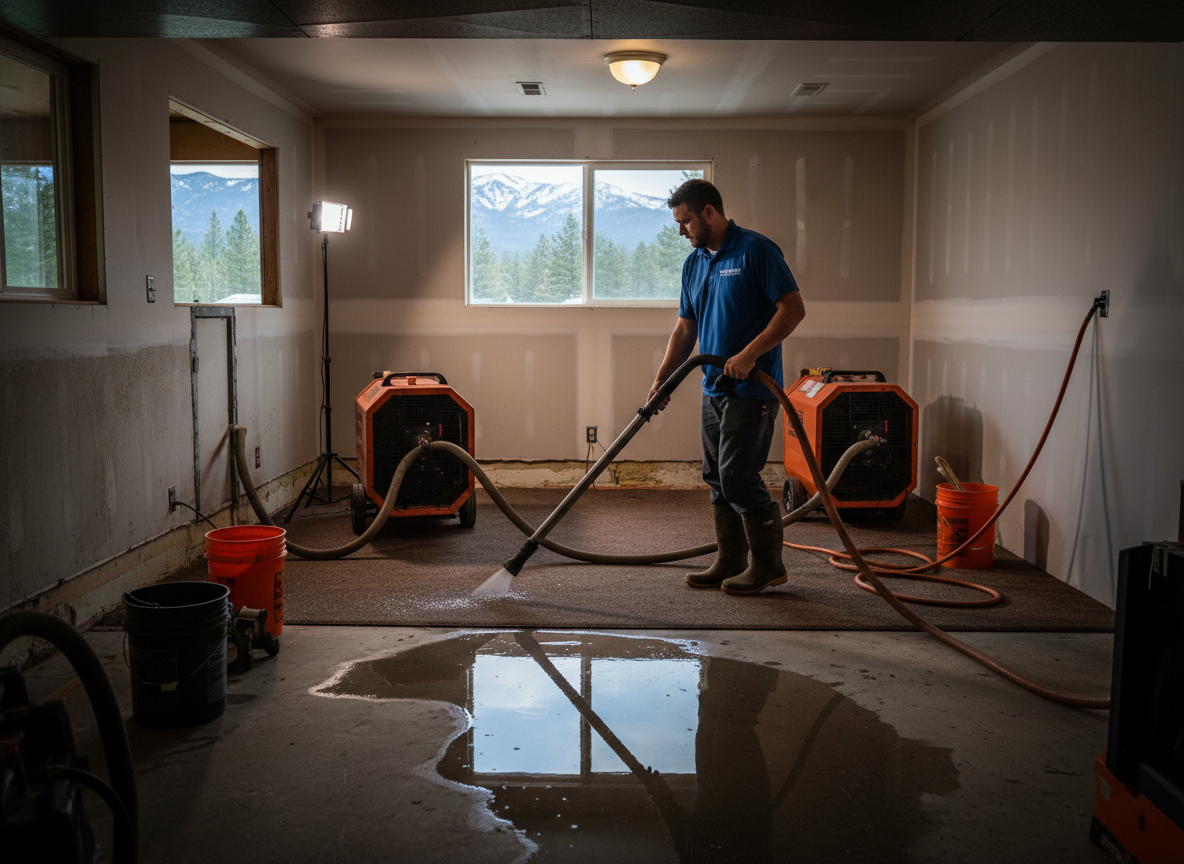
Sugarloaf sits at elevation in San Bernardino County where winter snow loads and sudden thaws send water through roof valleys and foundation cracks common in 1960s-1980s cabins. A small supply-line leak under a kitchen slab can migrate along the granite bedrock and surface weeks later in an adjacent bedroom, rotting subfloors before homeowners notice. Our crews map moisture with infrared because standard meters miss water trapped between the original shiplap and later drywall additions typical here.
Running Springs and Big Bear Lake properties share the same high-desert diurnal swings that crack copper and PEX joints every freeze cycle. When a leak hits load-bearing logs or post-and-beam frames, we isolate the section, document for insurance, and dry with low-grain refrigerant units sized for the thin mountain air that holds less moisture. Skipping the dehumidification step leaves hidden mold behind the cedar paneling that lines many Sugarloaf living rooms.
San Bernardino National Forest adjacency means strict rules on sediment discharge; we route extracted water through filters before release and never pump directly onto slopes that feed local creeks. Older septic systems common on Maple Lane lots also require careful containment so gray water from the leak does not overload leach fields already stressed by seasonal snowmelt.
Seasonal Leak Patterns
Freeze-thaw damage peaks from December through March when overnight lows dip below 20°F. Summer monsoon bursts send water under poorly flashed decks built on the steep lots that slope toward Highway 38.
Technician insight
In Sugarloaf the thing that catches most people out with water leak restoration is how fast snowmelt finds the gaps between the original 1970s foundation and later room additions; a pin-hole leak in the crawlspace can travel thirty feet along the bedrock before it shows up inside the living room, so we always check the full perimeter even when the stain looks small.
Crawlspace Supply Leak After January Thaw
A homeowner on Maple Lane noticed damp carpet near the woodstove after a warm spell melted roof snow. We traced the water to a cracked copper line under the 1978 addition where it had followed the granite slope and wicked into the subfloor. Extraction and targeted drying prevented rot from reaching the main cabin logs; the owners were back to full use within five days.
How it works
- 1
Site Assessment
Technician arrives from our Maple Lane base, locates the leak source, and documents moisture migration through the specific framing used in Sugarloaf cabins.
- 2
Water Extraction
Remove standing water and pull affected carpet or laminate while protecting the surrounding dry areas common in open-concept mountain homes.
- 3
Drying and Monitoring
Place air movers and dehumidifiers calibrated for high-elevation conditions, then check readings daily until materials return to local equilibrium moisture content.
- 4
Restoration Hand-off
Replace or repair damaged sections and coordinate with local contractors familiar with San Bernardino County permitting for structural fixes.
Pricing
Upfront quotes after on-site assessment; cost driven by square footage, depth of water migration into slab or log walls, and number of drying days required by winter humidity levels.