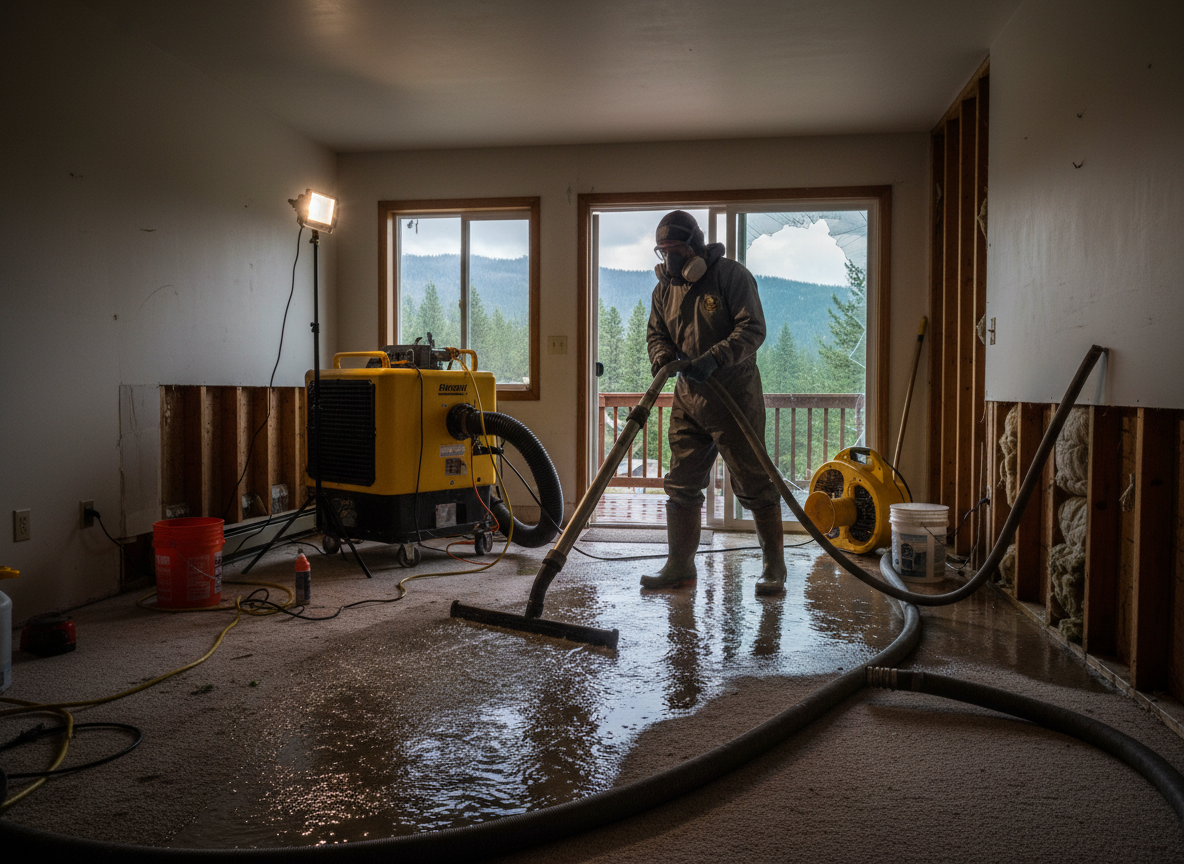
Sugarloaf sits at elevation in San Bernardino County where winter snowpack in the San Bernardino National Forest melts slowly into soil and foundations. Older cabins and single-story homes here often have crawl spaces that channel water toward sill plates and subfloors. When floodwater enters, it saturates insulation, drywall, and particleboard cabinets quickly. Technicians must remove baseboards early to check for hidden migration along the slab edge before mold sets in during the cold months.
Spring runoff from Big Bear Lake and Running Springs roads adds volume that overwhelms French drains installed decades ago. Extraction equipment has to account for the dense clay soils common on Maple Lane and surrounding streets that hold moisture longer than sandy soils. Dehumidifiers run longer here because lower winter temperatures slow evaporation. Homeowners who close up the house after a storm trap humidity that later damages hardwood floors installed over concrete.
Flood restoration in these conditions requires separating affected zones from living spaces to prevent cross-contamination. Technicians document moisture readings at multiple depths in the floor assembly before any drying begins. In Sugarloaf, power outages during heavy snow events can interrupt drying equipment, so portable generators become part of the standard setup. Final clearance testing checks both surface and embedded moisture to avoid callbacks when summer temperatures rise.
Technician insight
In Sugarloaf, the thing that catches most people out with Flood restoration services is how snow melt from the San Bernardino National Forest keeps feeding water into older crawl spaces long after the storm ends. Homeowners on Maple Lane often seal the vents thinking they are stopping the water when they are actually trapping moisture that later damages floor joists.
Crawl Space Flood After Heavy Snow
Water entered a Sugarloaf home near Running Springs through saturated soil around the foundation. Inspection showed standing water under the subfloor and wet insulation against the rim joists. Crew extracted water, dried the space over five days with equipment running through a cold snap, and removed damaged insulation before any mold formed.
How it works
- 1
Emergency Assessment
Technician arrives within hours, maps water source and extent using moisture meters across crawl spaces and living areas.
- 2
Water Extraction
High-volume pumps and wands remove standing water from floors and yards while protecting nearby San Bernardino National Forest drainage.
- 3
Drying and Monitoring
Air movers and dehumidifiers placed with daily readings logged until materials reach dry standard for the mountain climate.
- 4
Sanitization and Restoration
Antimicrobial treatment applied to affected wood and concrete, followed by removal of unsalvageable materials and reinstallation.
Pricing
Upfront quotes issued after on-site inspection; final cost depends on water volume, affected square footage, and whether crawl space access is required.