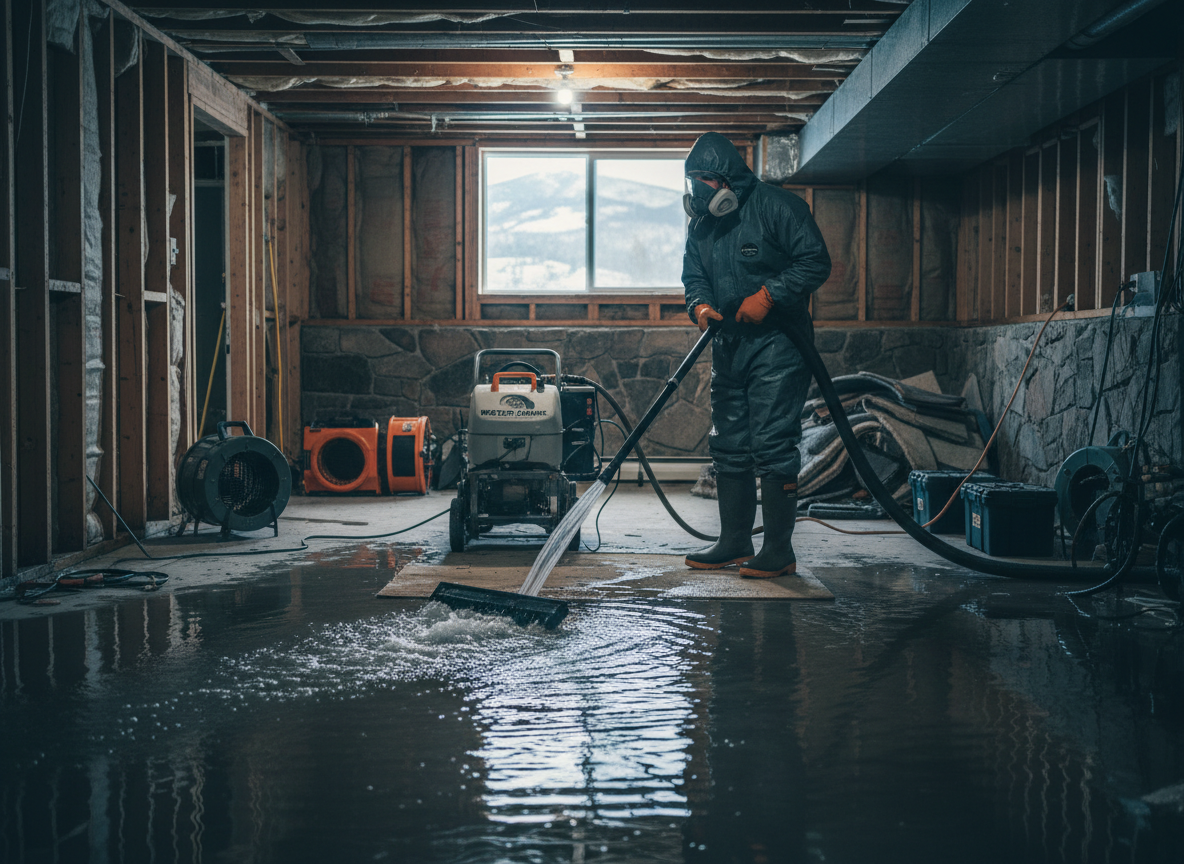
Sugarloaf sits at elevation in the San Bernardino Mountains where winter snow loads and spring thaws regularly push water into crawl spaces and under older cabin floors. Freeze-thaw cycles crack supply lines in unheated utility rooms, and once water escapes it travels along the slope toward the San Bernardino National Forest boundary. Crews must account for steep driveways that limit equipment access and for the way pine needle mulch around foundations holds moisture against siding. Extraction begins with moisture mapping to locate hidden pockets before any drying equipment is placed, because the cold nights here slow evaporation rates compared with lower elevations in San Bernardino County.
Homes built before the 1980s in Sugarloaf and nearby Running Springs often lack proper vapor barriers, so water that reaches subfloors can wick into particleboard and insulation within hours. Emergency protocols include isolating electrical circuits in wet zones, removing saturated carpet pads the same day, and setting up commercial air movers aimed at wall cavities rather than open rooms. Because daytime temperatures swing sharply once the sun drops behind the ridge, technicians monitor relative humidity hourly and adjust dehumidifier settings to prevent condensation on cold window glass. Leaving any residual moisture invites mold within the tight building envelopes common in these mountain neighborhoods.
Access routes through Big Bear Lake corridors can close during heavy snow, so response planning includes pre-staging portable generators and extra desiccant packs at the Maple Lane base. When a call comes from a property backing onto national forest land, crews verify drainage paths before pumping to avoid directing water onto protected slopes. Documentation of every step protects homeowners when insurance adjusters later question the extent of hidden damage in these older structures.
Technician insight
In Sugarloaf, the thing that catches most people out with Emergency water cleanup is how fast snowmelt from the San Bernardino National Forest slopes runs under older cabin crawl spaces during the first warm spell after a big winter, especially when the ground is still frozen and water has nowhere to drain.
Spring Snowmelt Intrusion
A cabin near the forest edge took on water from rapid snowmelt along the slope. Inspection showed saturation under the living-room subfloor and into the insulation. Extraction and targeted drying prevented further spread into adjacent rooms and allowed the owners to return once levels stabilized.
How it works
- 1
Arrival And Safety Check
Technicians arrive within the service window, verify power shutoffs, and establish containment to protect unaffected rooms from cross-contamination.
- 2
Water Extraction
Standing water is removed with truck-mounted pumps and portable wands while moisture meters track saturation levels in floors and walls.
- 3
Drying And Monitoring
Air movers and dehumidifiers are positioned based on readings; daily visits adjust equipment until wood moisture content returns to local baseline.
- 4
Final Verification
Post-drying inspection confirms all affected materials are dry before any reconstruction recommendations are discussed.
Pricing
Upfront quotes after inspection; final cost depends on water volume, access difficulty, and number of affected rooms.