Sugarloaf sits at elevation in San Bernardino County with cold winters that bring heavy snow followed by spring melt. Water from snowpack around the San Bernardino National Forest often finds its way into crawlspaces and under older cabin foundations. Once it reaches wall cavities or subfloors, hidden mold colonies form quickly because daytime temperatures stay cool and drying is slow. Homeowners in neighborhoods near Maple Lane commonly discover black growth on particleboard or behind baseboards weeks after the visible water is gone.
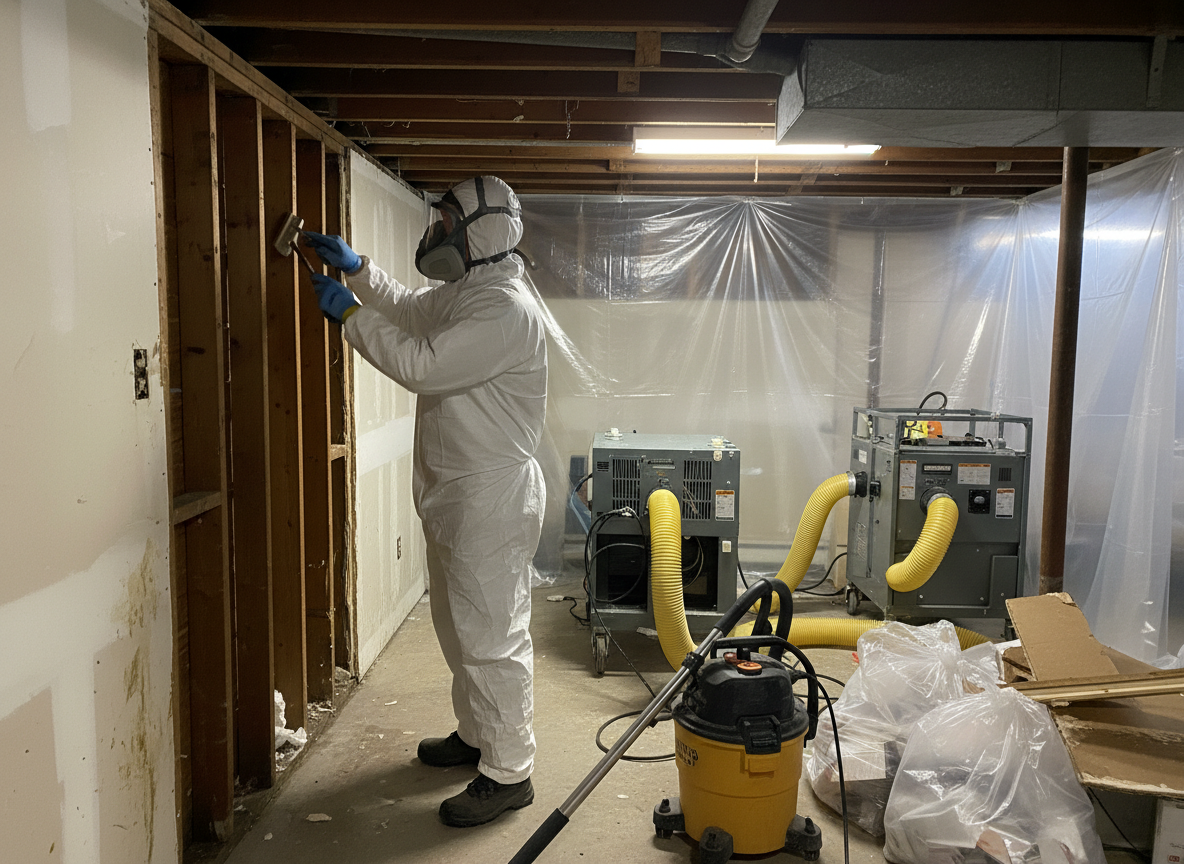
Standard fans and dehumidifiers are rarely enough here. The combination of dense pine forest shade and short warm seasons keeps relative humidity elevated inside structures. We remove affected drywall sections entirely rather than surface-treat, then use air scrubbers and negative air machines to capture spores before they spread to unaffected rooms. Running Springs and Big Bear Lake properties face similar issues when roof leaks meet attic insulation that never fully dries between storms.
We also address the source points created by terrain. Driveways and walkways on slopes direct meltwater toward foundations, and many Sugarloaf cabins built before modern grading standards lack proper French drains. During remediation we document moisture readings at multiple depths in framing and soil so the homeowner sees exactly where the water originated and how to prevent recurrence before winter returns.
Technician insight
In Sugarloaf, the thing that catches most people out with Mold remediation after water damage is how spring snowmelt from the San Bernardino National Forest soaks into older cabin crawlspaces along Maple Lane and never fully evaporates because the mountain shade keeps temperatures low. Homeowners often stop at visible ceiling stains and miss colonies growing on the underside of subfloors.
Crawlspace Mold After Snowmelt
Heavy spring melt sent water under a Sugarloaf cabin near the national forest boundary. We found active mold on joists and insulation that had stayed damp for weeks. We contained the space, removed the affected insulation and sheathing, dried the framing, and installed a vapor barrier over the soil. Follow-up readings showed the structure stayed dry through the next storm cycle.
How it works
- 1
Initial Assessment
We arrive within hours, map all wet materials, and use moisture meters plus thermal imaging to locate hidden water behind walls and under floors.
- 2
Containment Setup
Plastic barriers and negative air pressure isolate the work zone so spores do not migrate into living spaces or HVAC systems.
- 3
Material Removal and Cleaning
Porous materials showing growth are cut out and bagged; non-porous surfaces receive HEPA vacuuming and antimicrobial treatment.
- 4
Drying and Verification
Industrial dehumidifiers and air movers run until readings drop below 15 percent moisture content, followed by third-party air sampling.
Pricing
Cost depends on square footage affected, depth of hidden growth, and whether structural materials must be replaced; we provide an upfront written scope after inspection.