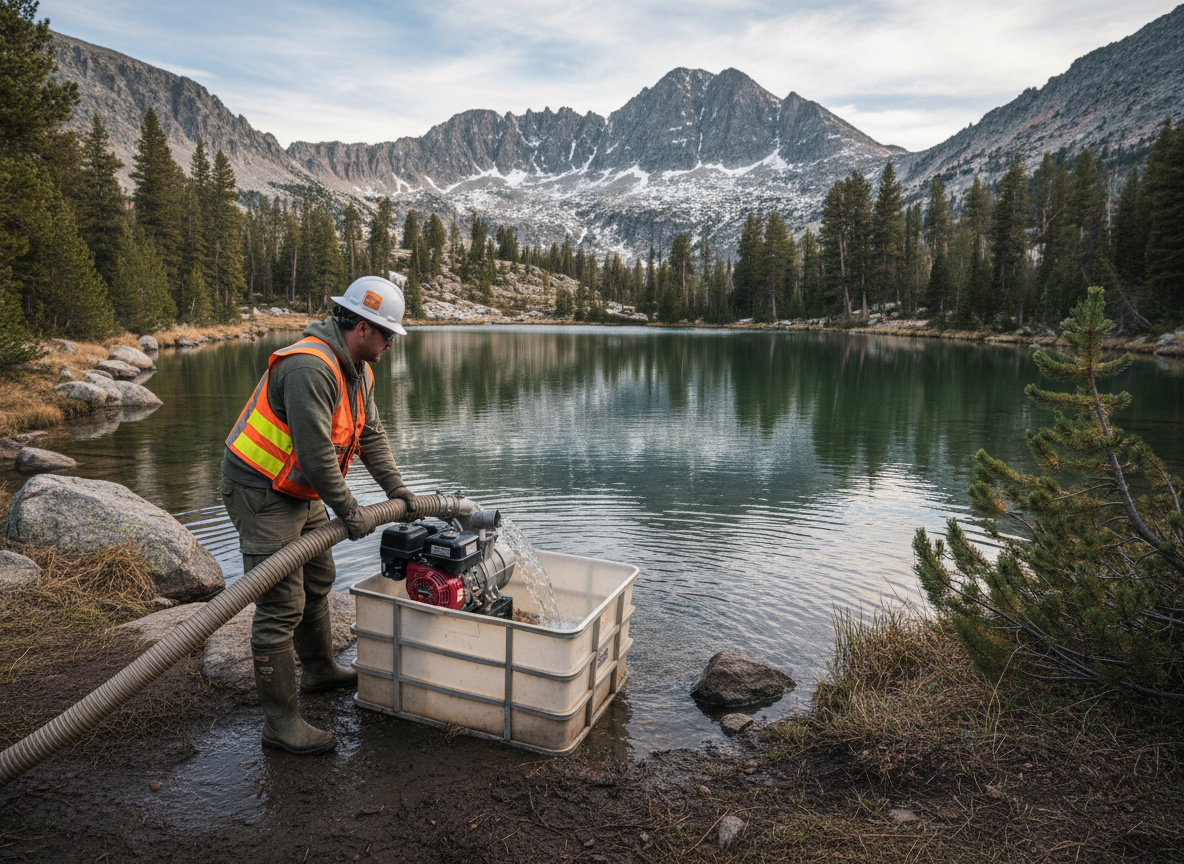
Sugarloaf sits at elevation in San Bernardino County where cold winters bring heavy snow that melts fast against warm spring days. Water extraction crews here routinely deal with runoff entering crawl spaces and basements along Maple Lane and the surrounding ridges. Older single-story cabins and A-frames common in the area often have pier-and-beam foundations that trap water against joists once snowpack thaws. Technicians use truck-mounted pumps and submersible units sized for the volume that typically arrives from San Bernardino National Forest slopes rather than urban flooding.
Extraction work changes once temperatures drop below freezing at night. Ice can hide pockets of liquid water under flooring or behind baseboards in homes near Running Springs Road. Crews check for these pockets with moisture meters before pulling equipment because incomplete removal leads to cupping hardwood and drywall delamination when the next warm spell hits. Access roads can narrow after storms, so smaller portable extractors are staged at the 498 Maple Ln shop for quick deployment when larger trucks cannot reach properties tucked against the forest boundary.
Standing water in Sugarloaf frequently carries sediment from the granite soils and pine needles common around Big Bear Lake turnoffs. This debris clogs standard shop-vac filters fast, requiring crews to switch to debris-tolerant pumps early in the job. Extraction stops only after substrate readings fall below 15 percent moisture content on multiple walls and floors; skipping this step leaves hidden saturation that reappears weeks later once the mountain humidity rises again.
Technician insight
In Sugarloaf the thing that catches most people out with water extraction is snowmelt that refreezes overnight in the crawl space. Homes built before the 1980s along the forest edge often have dirt floors that stay saturated for weeks if you only pull the visible water; you have to keep checking under the insulation or the joists rot before summer.
Spring Snowmelt Under Cabin Floor
Rapid melt from the ridge behind a Maple Lane cabin sent water under the pier-and-beam foundation. Extraction crews found standing water and saturated insulation that had refrozen in pockets. Portable pumps cleared the liquid while heaters prevented new ice formation; final meter checks confirmed safe levels before the next freeze cycle.
How it works
- 1
Site Assessment
Technicians arrive within hours, map water depth and direction of flow, and identify affected materials in crawl spaces or slab edges typical of Sugarloaf cabins.
- 2
Water Removal
Truck-mounted and portable extractors pull standing water while protecting nearby San Bernardino National Forest drainage paths from sediment discharge.
- 3
Moisture Verification
Infrared cameras and pin meters confirm hidden saturation behind walls and under floors before equipment leaves the property.
- 4
Drying Setup
Air movers and dehumidifiers are positioned based on the home's insulation type and the current mountain temperature swings.
Pricing
Pricing depends on water volume, access difficulty and drying duration; upfront quotes provided after assessment.