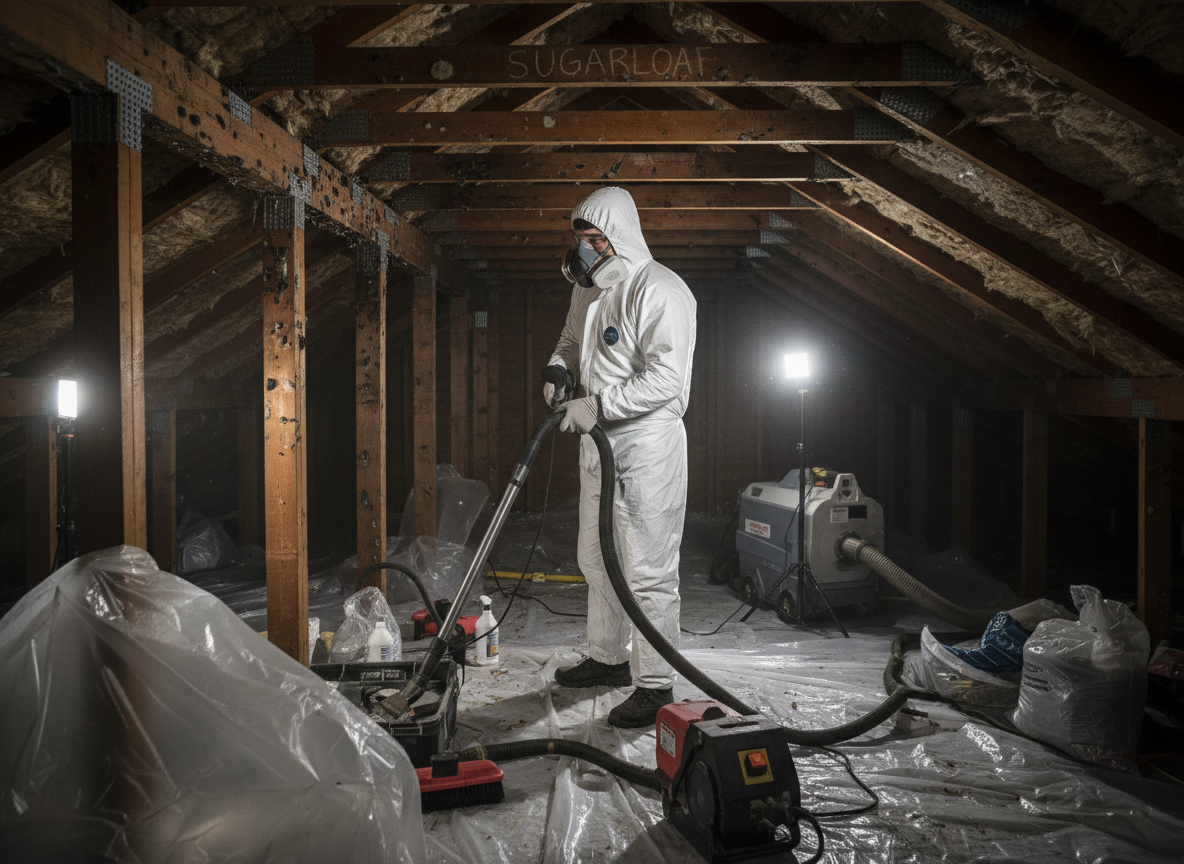
Sugarloaf sits at elevation in San Bernardino County with cold winters that bring heavy snow and rapid melt cycles. Water often finds its way under older roof decks near the San Bernardino National Forest, especially on homes built before modern ventilation standards. Once moisture reaches insulation or plywood, mold colonies form quickly in the enclosed attic space where airflow is limited by surrounding terrain and dense tree cover.
Running Springs and Big Bear Lake properties share the same mountain climate patterns. Warm summer days followed by sudden freezes cause ice dams along eaves, pushing meltwater into attics. Older single-story cabins common in Sugarloaf frequently lack ridge vents, so humidity lingers after any leak. Remediation requires full containment to keep spores from drifting into living areas below during removal.
Technicians begin by mapping moisture with infrared cameras and moisture meters before any demolition. Affected insulation is bagged on site, sheathing is treated or replaced, and the space is dried to below 50 percent relative humidity. Final clearance testing confirms spore levels match outdoor baselines before insulation is reinstalled and vents are added where code allows.
Technician insight
In Sugarloaf, the thing that catches most people out with attic mold remediation is how snow piles against north-facing eaves on older cabins near the National Forest, then melts into the attic through unsealed penetrations that homeowners never notice until the ceiling stains appear.
Snow Melt Intrusion on Maple Lane
A homeowner in Sugarloaf noticed ceiling discoloration after a heavy winter melt. Inspection found water tracking from an ice dam along the north roof edge into fiberglass batts. Crews contained the attic, removed saturated insulation, treated the decking, and added ridge ventilation before reinstalling insulation.
How it works
- 1
Site Inspection
Technicians assess attic access, locate active moisture sources from snow melt or roof leaks, and document affected materials in Sugarloaf homes.
- 2
Containment Setup
Plastic barriers and negative air machines isolate the attic from living spaces to prevent spore migration during work.
- 3
Material Removal
Moldy insulation and damaged wood are cut out, bagged, and removed while surfaces are cleaned and treated.
- 4
Drying and Clearance
Dehumidifiers and air movers bring moisture levels down; post-remediation testing verifies the attic meets safe standards before rebuild.
Pricing
Project cost depends on attic size, depth of insulation, and extent of structural damage; upfront quotes are provided after inspection.