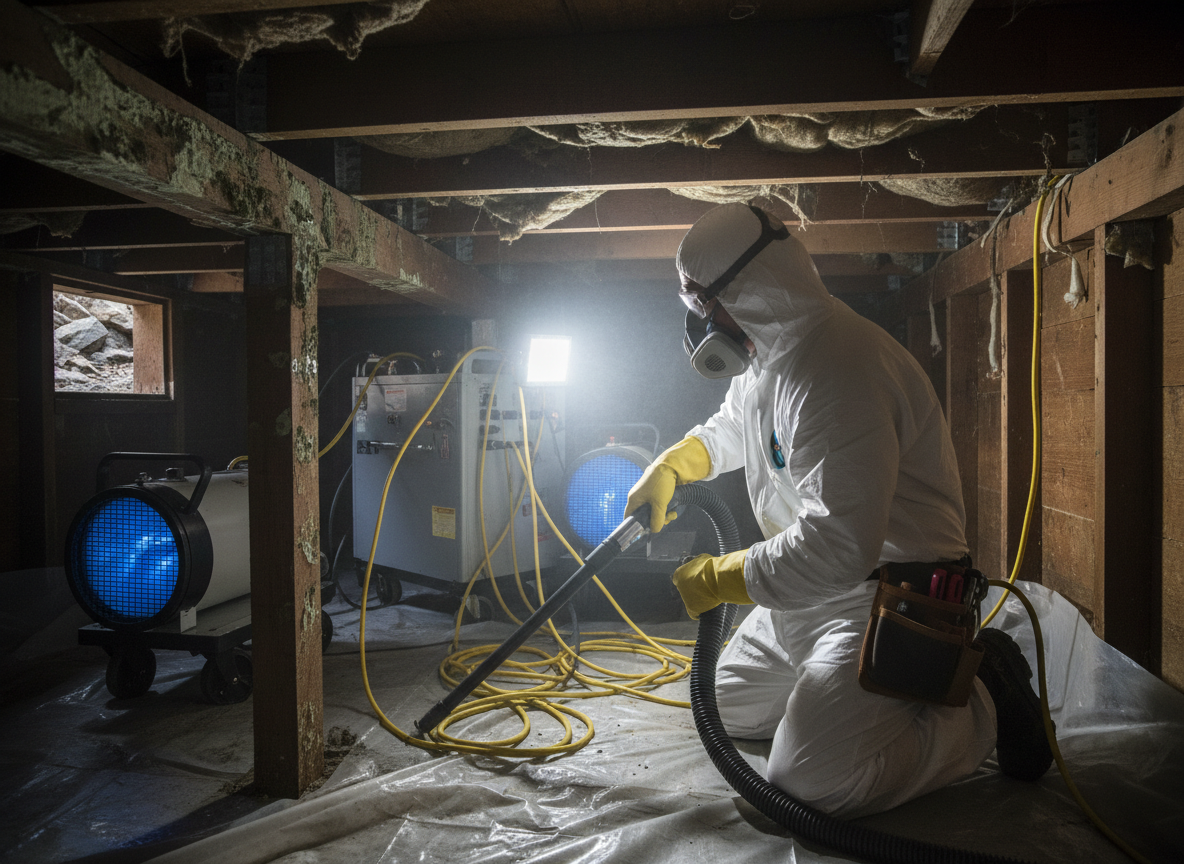
Sugarloaf sits at elevation in the San Bernardino Mountains with cold winters that bring heavy snow followed by spring melt. This cycle drives water into crawl spaces under older cabins, especially those built before modern vapor barriers became standard. Mold often takes hold on floor joists and insulation once temperatures rise and humidity lingers. Homes near the San Bernardino National Forest boundary face extra runoff from surrounding slopes, making access and drying more difficult than in lower-elevation towns like Running Springs.
Effective removal starts with identifying the exact moisture source rather than simply treating visible growth. In Sugarloaf, common hidden paths include poorly sealed foundation vents, cracked stem walls, and condensation on cold pipes during winter. Technicians must work around tight clearances and uneven dirt floors typical of mountain construction while containing spores so they do not migrate into living areas above. Post-removal drying requires equipment sized for the cold, dense air found at this elevation.
San Bernardino County building practices emphasize proper grading away from foundations, yet many Sugarloaf properties still rely on original drainage that has settled over decades. Ignoring this leads to repeat growth within a season. Full removal includes disposal of contaminated insulation, treatment of wood members, and installation of a sealed vapor barrier suited to freeze-thaw cycles. Homeowners should expect follow-up checks after the first heavy snow to confirm the space stays dry.
Technician insight
In Sugarloaf, the thing that catches most people out with crawl space mold removal is repeated moisture from snow sitting against north-facing foundations on older Maple Lane and surrounding cabins. Homeowners often seal vents thinking it stops the problem, but that traps humidity once the melt starts and the cold air sinks.
Spring Melt Mold in North-Facing Crawl Space
Heavy winter snow sat against a cabin foundation near the San Bernardino National Forest boundary. Meltwater entered through settled grading and older vents, producing mold across joists and insulation. The team contained the space, removed saturated materials, dried the structure, and installed a sealed vapor barrier. Follow-up after the next snow confirmed the space stayed dry.
How it works
- 1
Site Assessment
Technicians inspect the crawl space from the 498 Maple Ln base, checking for moisture entry points created by Sugarloaf snow melt and terrain slope.
- 2
Containment Setup
Negative air machines and plastic barriers isolate the work area so spores do not reach living spaces in these tightly built mountain cabins.
- 3
Material Removal and Treatment
Contaminated insulation and affected wood are removed, then remaining surfaces receive antimicrobial application suited to cold, humid conditions.
- 4
Drying and Barrier Installation
Industrial dehumidifiers and air movers dry the space, followed by a sealed vapor barrier to handle future snow-melt cycles.
Pricing
Pricing depends on crawl space size, access difficulty on sloped lots, and extent of insulation replacement needed after snow-melt events.