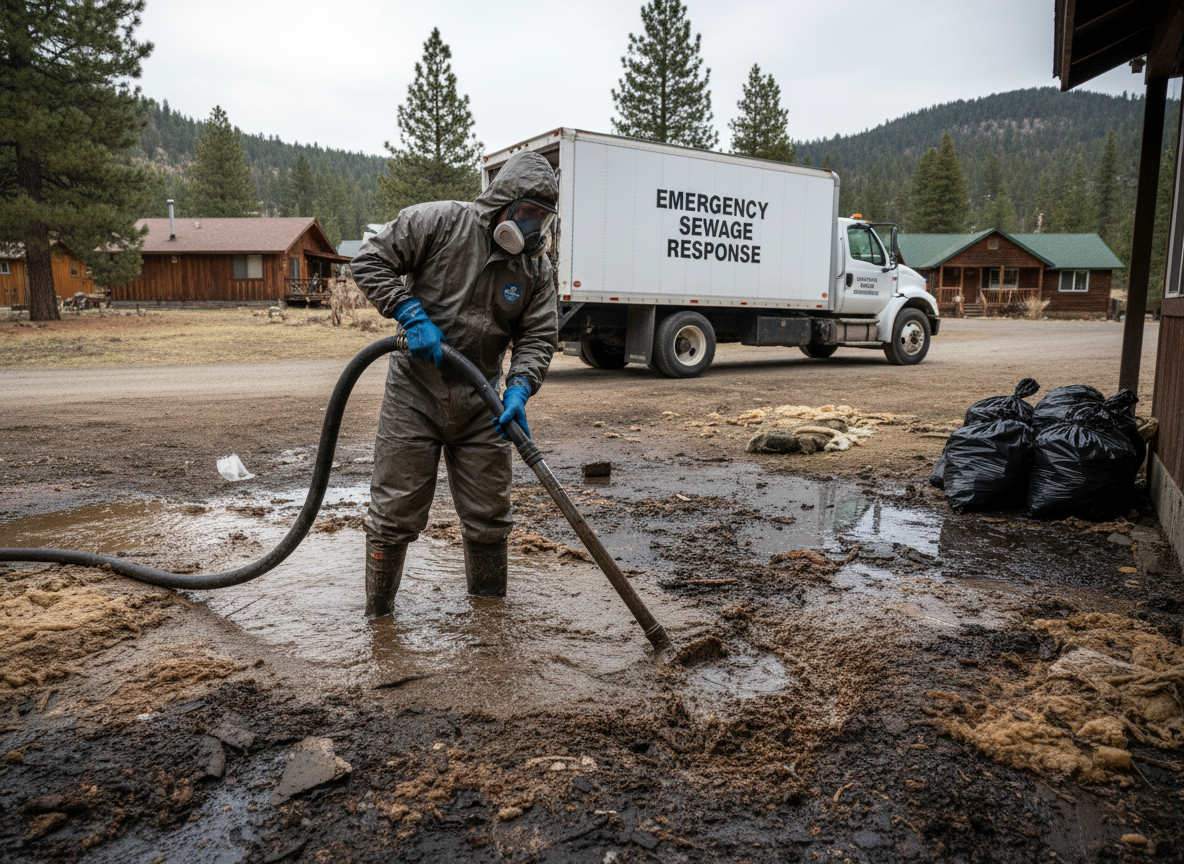
Sewage backups in Sugarloaf often trace to frozen pipes during cold winters or heavy snow loads pressing on septic and sewer lines near the San Bernardino National Forest. Crews must first isolate the affected zone because mountain homes frequently sit on sloped lots with crawlspaces that trap contaminated water under floor joists. Contaminated drywall, insulation, and subflooring are removed to the studs when saturation reaches the lower wall plates, a common occurrence in cabins built before modern vapor barriers.
Sanitization protocols follow EPA guidelines for Category 3 water, using hospital-grade disinfectants on all hard surfaces and HEPA air scrubbers to capture aerosolized particles. In Running Springs and Sugarloaf neighborhoods, limited road access after snowfall can delay equipment arrival, so initial containment with sandbags and plastic sheeting becomes critical to keep effluent from migrating toward foundations or neighboring lots. Moisture mapping with infrared cameras identifies hidden pockets behind knotty-pine paneling typical of local construction.
Drying times extend in the high-elevation climate because cold air holds less moisture, requiring supplemental heat alongside dehumidifiers to reach 12-15 percent wood moisture content before reconstruction. Homeowners should avoid entering the space until clearance testing confirms zero coliform counts, especially when pets or children occupy the property year-round.
Technician insight
In Sugarloaf, the thing that catches most people out with sewage cleanup is how snowmelt and frozen sewer lines in older cabins near the national forest push effluent under the house where it stays liquid long after the surface freezes, forcing extra extraction time in tight crawlspaces.
Winter Backup in Sugarloaf Cabin
A sewage line froze and backed up into a bathroom during a cold snap. Inspection revealed effluent had wicked into the subfloor and joists beneath the home. Crews extracted the liquid, removed contaminated wood, disinfected all surfaces, and ran drying equipment until moisture readings cleared. The cabin was returned to safe use before the next snowstorm.
How it works
- 1
Initial Assessment
Technicians arrive within hours, map the spill extent, and test for hidden moisture in crawlspaces common to Sugarloaf cabins.
- 2
Containment and Extraction
Plastic barriers and negative air machines isolate the area while pumps and vacuums remove standing effluent before it reaches soil or snowmelt paths.
- 3
Removal of Contaminated Materials
Saturated drywall, carpet, and insulation are cut out and bagged for disposal following county regulations in San Bernardino.
- 4
Disinfection and Drying
EPA-approved antimicrobials treat all surfaces, followed by targeted drying with equipment suited to cold mountain temperatures.
- 5
Final Clearance
Air quality and surface testing confirm safe conditions before any reconstruction begins.
Pricing
Cost depends on square footage affected, depth of contamination into subfloors, and winter access challenges on mountain roads.