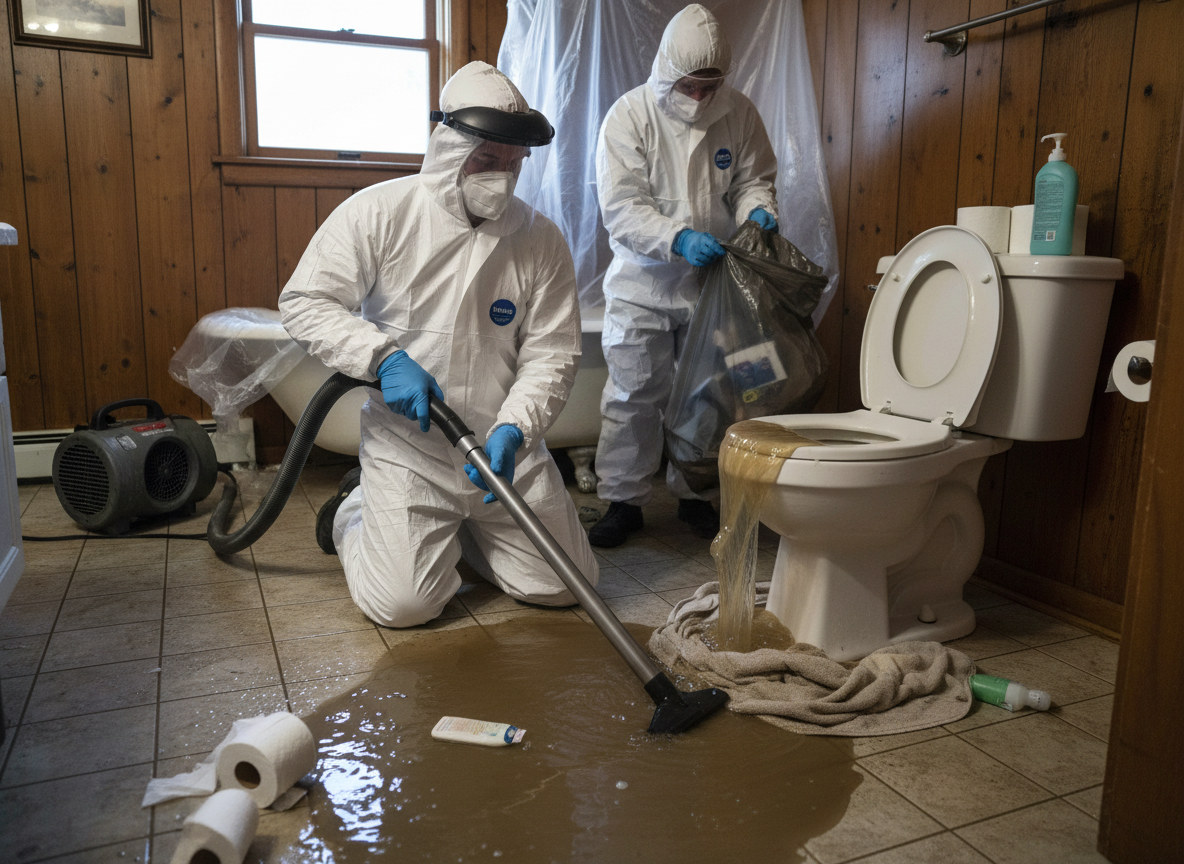
Toilet overflows in Sugarloaf often trace to frozen supply lines during cold winters when temperatures drop below freezing around the San Bernardino National Forest. Older cabin-style homes common on streets like Maple Ln have aging cast-iron or galvanized pipes that crack under ice expansion, sending water across vinyl or hardwood floors and into crawl spaces. Quick extraction prevents saturation of particleboard subfloors that swell permanently in the damp air after snowmelt. Technicians use moisture meters to trace water that travels downhill on the sloped terrain toward Running Springs.
Sanitation requires EPA-registered disinfectants rated for gray water because toilet overflows mix with waste and can carry bacteria into porous materials. In Sugarloaf’s variable climate, warm summer days speed mold growth on wet drywall while winter snow keeps basements cold and slows evaporation. Homes near Big Bear Lake frequently sit on septic systems, so crews avoid pushing contaminated water into leach fields during extraction. Edge cases include overflows that reach electrical outlets in older 1960s builds, requiring power isolation before drying begins.
After removal, dehumidifiers and air movers run for 48–72 hours depending on insulation type and whether carpet padding was saturated. Technicians document hidden pockets behind vanities or under toilets to satisfy insurance adjusters familiar with San Bernardino County claims. Homeowners should avoid DIY fans that spread spores into living spaces before professional containment is set.
Technician insight
In Sugarloaf, the thing that catches most people out with Toilet overflow cleanup is how snowmelt from the national forest raises the water table and pushes backup into older septic laterals along Maple Ln. Homeowners often mop the visible puddle and miss the water that has wicked under the toilet flange into the crawl space, where cold winter air keeps it from drying on its own.
Frozen Line Backup on Maple Ln
After a cold snap, a Sugarloaf resident found water spreading from the bathroom into the hallway. Inspection showed a cracked supply line under the slab that had refrozen overnight. We extracted the water, dried the subfloor, and sealed the affected area before mold could form in the damp mountain air.
How it works
- 1
Initial Assessment
Arrive on site, locate the overflow source, and map water migration through flooring and walls using moisture detection tools.
- 2
Water Extraction
Remove standing water and contaminated materials with truck-mounted pumps and portable extractors suited to mountain access roads.
- 3
Drying and Dehumidification
Place industrial drying equipment and monitor daily moisture levels until readings match unaffected areas of the home.
- 4
Sanitation and Odor Control
Apply antimicrobial treatments and ventilate to eliminate bacteria and odors left by waste water.
- 5
Final Inspection
Verify dryness, remove equipment, and provide a written report for insurance or homeowner records.
Pricing
Upfront quotes after on-site inspection; cost varies with water volume, flooring type, and whether subfloor drying is required.