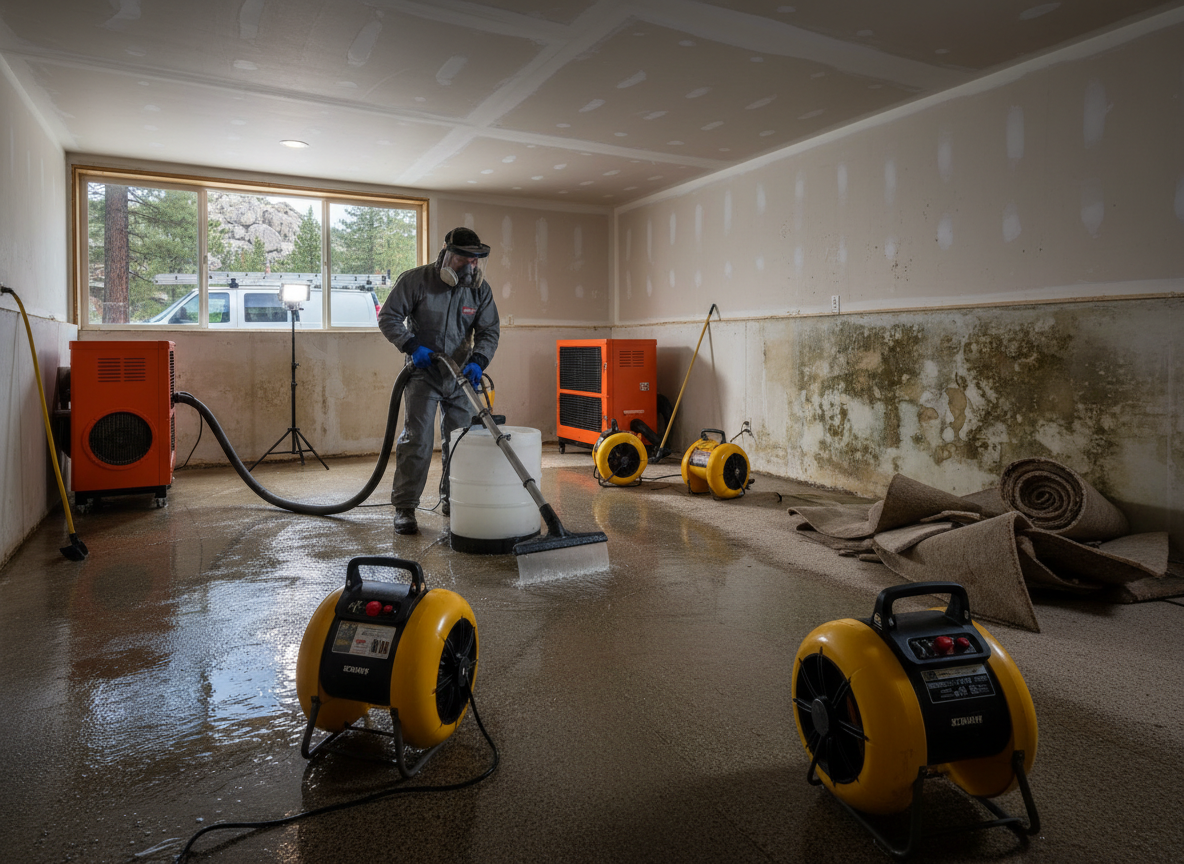
Sugarloaf sits in San Bernardino County at elevation where winter snow accumulation around the San Bernardino National Forest leads to heavy spring melt. This water often enters crawl spaces and older cabin foundations along Maple Lane and nearby streets before homeowners notice. Cold overnight temperatures slow natural evaporation, so standing water in subfloors can wick into wall cavities and insulation within days. Standard residential fans fail here because they cannot overcome the dense, cold air that settles in these valleys near Running Springs and Big Bear Lake.
Mitigation work in this area requires equipment that handles both liquid extraction and low-temperature drying. We map moisture with infrared cameras because visual inspection misses water trapped behind knotty-pine paneling common in Sugarloaf cabins built before the 1980s. Removing baseboards and drilling small weep holes allows airflow behind walls without full demolition. Forest debris carried by runoff frequently clogs French drains, so we clear those lines during every job to prevent repeat intrusion once temperatures drop again.
Category 3 water from snowmelt mixed with soil and pine needles demands antimicrobial application rated for porous wood surfaces. We document every step with photos because San Bernardino County inspectors sometimes review claims after heavy winters. Homeowners who attempt DIY drying with household dehumidifiers usually push moisture deeper into floor joists, creating hidden rot that only appears when the next freeze-thaw cycle hits. Proper mitigation stops that progression before it reaches electrical boxes or support posts.
Technician insight
In Sugarloaf, the thing that catches most people out with water damage mitigation is how spring snowmelt from the San Bernardino National Forest seeps under older cabin skirting along roads toward Running Springs, then travels laterally under the slab because the clay-heavy soil holds moisture for weeks.
Snowmelt Under Cabin Skirting
A Sugarloaf cabin near the national forest boundary showed rising damp in the living room after a heavy snow year. We traced water entering under the skirting from poor drainage along the driveway. Extraction and targeted drying behind the paneling prevented mold in the subfloor. The home dried completely before summer visitors arrived.
How it works
- 1
On-Site Assessment
Technician arrives within hours, checks all affected levels, and identifies hidden moisture paths created by Sugarloaf's sloped lots and older foundations.
- 2
Water Extraction
Remove standing water and saturated materials using truck-mounted pumps suited for cold, debris-laden meltwater common near the national forest.
- 3
Drying and Monitoring
Place commercial air movers and dehumidifiers calibrated for mountain winters, then check moisture readings daily until levels match unaffected areas.
- 4
Final Verification
Confirm all surfaces are dry, treat remaining risk areas, and provide documentation for insurance or county records.
Pricing
Pricing depends on water volume, affected square footage, and whether hidden cavities require opening walls. Upfront quotes given after inspection.