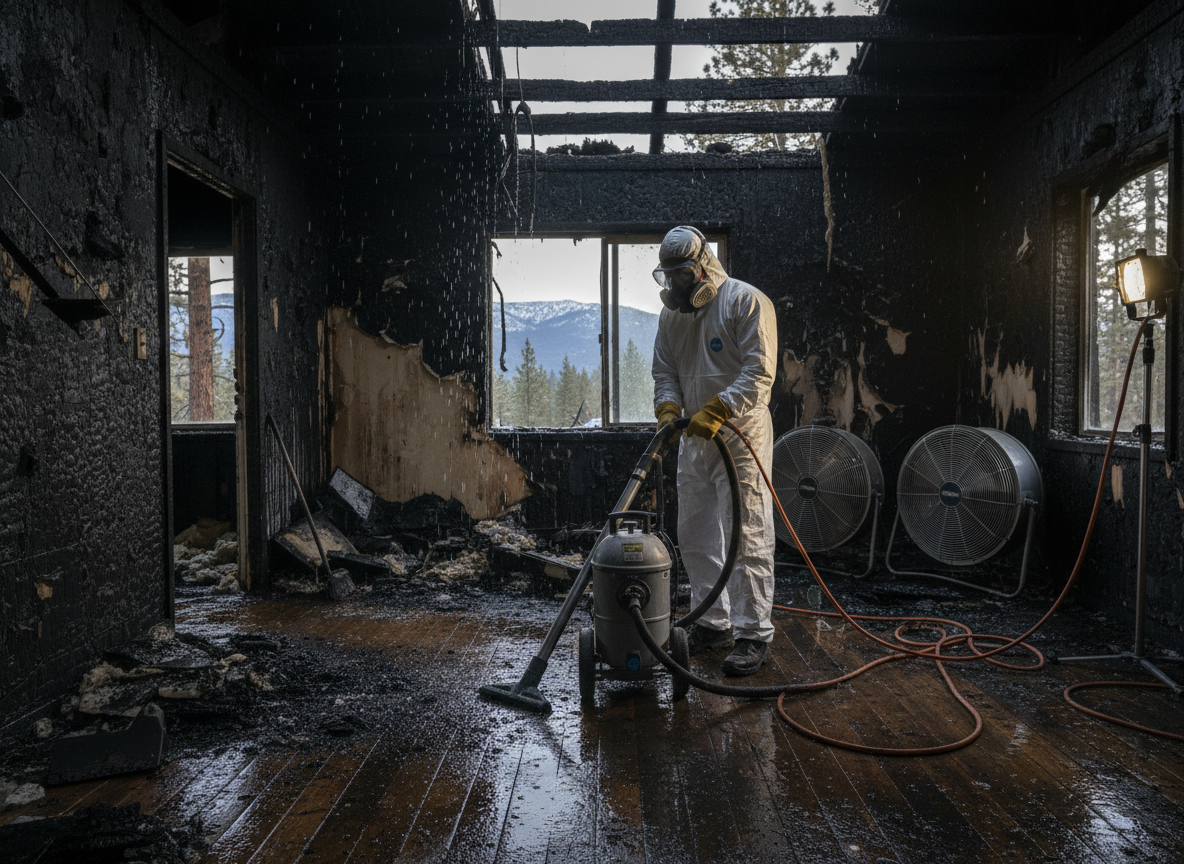
Firefighting in the San Bernardino National Forest often leaves standing water inside Sugarloaf cabins and older homes built on sloped terrain. That water mixes with soot and ash, driving it deep into subfloors and wall cavities where it can freeze during winter nights and expand, splitting framing. Crews must separate the water extraction phase from soot removal because pressure washing too early spreads acidic residue into clean areas.
Running Springs and Big Bear Lake properties share the same issue: post-fire humidity lingers longer in thick log or cedar structures common here. We pull baseboards early to check for hidden migration along the foundation, then use low-grain refrigerant dehumidifiers sized for the colder mountain air rather than standard units that short-cycle in snow season. Ignoring this step lets mold take hold once temperatures rise again in spring.
San Bernardino County code requires removal of all porous materials contacted by fire-suppression water once char or odor is present. In Sugarloaf that frequently means cutting out sections of tongue-and-groove ceilings and replacing insulation blown with cellulose that has wicked water from roof penetrations. Homeowners who attempt to dry only visible puddles often discover the odor returns the first time the wood stove is lit again.
Technician insight
In Sugarloaf the thing that catches most people out with water damage remediation after fire is how quickly suppression water freezes inside wall cavities once nighttime temperatures hit the teens. Older cabins on Maple Ln and nearby streets often have no vapor barrier, so the water travels farther than anyone expects before it turns to ice and splits the studs.
Frozen Water Behind Cedar Siding
A homeowner in Sugarloaf called after winter snow started melting on a roof damaged during a nearby wildfire. We found suppression water that had wicked behind cedar siding and frozen solid against the sheathing. Extraction and targeted drying prevented further expansion damage once temperatures climbed, and only two wall sections needed replacement.
How it works
- 1
Site Assessment
Inspect all affected rooms, attics, and crawl spaces for water migration paths created by fire hose pressure and roof damage.
- 2
Water Extraction
Remove standing and trapped water using truck-mounted units before temperatures drop and freezing occurs inside walls.
- 3
Containment And Soot Separation
Isolate areas to prevent soot redistribution while drying proceeds, using negative air and physical barriers.
- 4
Drying And Monitoring
Deploy equipment calibrated for cold mountain nights and track moisture levels in framing until readings stabilize.
- 5
Material Removal And Documentation
Cut out saturated porous materials per local requirements and provide photos for insurance submission.
Pricing
Upfront quotes provided after on-site inspection; scope varies with hidden migration and freeze damage common in winter.