2026-10-15 ·
Mold Prevention After Water Intrusion in Humid Mountain Climates
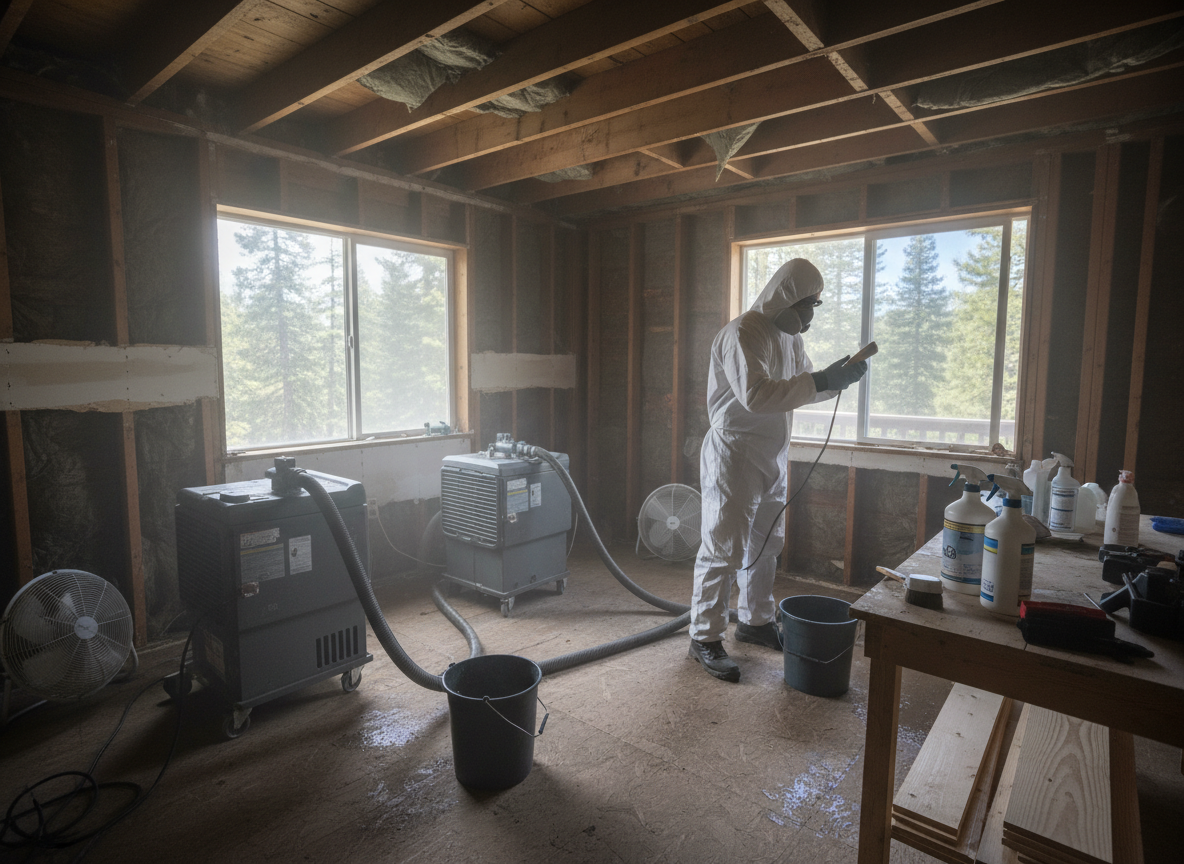
Acting within 24-48 hours after water intrusion stops most mold growth in Sugarloaf homes. Mountain humidity from snowmelt and summer rains accelerates spore development on wood and drywall in older cabins throughout San Bernardino County.
Mountain Climate and Water Intrusion Patterns
Sugarloaf sits at higher elevation with cold winters that bring heavy snow and warm summers that drive rapid melt. Snow accumulation on roofs often leads to leaks around chimneys and vents in cabins built decades ago. Once temperatures rise, moisture seeps into attics and wall cavities where airflow stays limited. Nearby Big Bear Lake and Running Springs experience similar cycles, but Sugarloaf's terrain funnels runoff toward foundations more directly. These conditions turn small intrusions into hidden moisture pockets within 12-24 hours if extraction does not begin immediately.
First 48 Hours: Containment and Extraction
Isolate the affected area with plastic sheeting and negative air to keep spores from spreading to unaffected rooms. Remove standing water using extraction equipment rated for 50-100 gallons per minute on carpet and hardwood. In Sugarloaf cabins, focus on crawl spaces where soil stays damp year-round. Open windows only when outdoor humidity drops below 50 percent, which occurs most reliably in late afternoon during summer months. Homeowners who skip this window often see visible growth on baseboards within three days.
Drying Protocols for Humid Mountain Air
Deploy commercial air movers and dehumidifiers sized at one unit per 300 square feet until moisture readings fall below 12 percent on wood. Run equipment continuously for 72-96 hours even after surfaces feel dry, because insulation behind walls in Sugarloaf homes retains moisture longer than in lower elevations. Check readings daily with a pin meter rather than relying on touch. Link this process to water damage mitigation for properties that experience repeated snowmelt events.
Ongoing Monitoring and Seasonal Checks
Inspect attics and crawl spaces every two weeks during spring melt and after any summer storm. Look for musty odors or soft drywall near plumbing penetrations common in older Sugarloaf builds. DIY inspection for leaks in Sugarloaf cabins after heavy snow outlines a simple checklist that catches issues before they require full mold remediation after water damage. Schedule professional assessment if readings stay above 15 percent after five days of drying.
Long-Term Prevention in Local Housing Stock
Seal foundation cracks and improve attic ventilation to handle the 30-40 degree temperature swings typical between day and night in San Bernardino National Forest areas. Replace aged felt underlayment on roofs during re-shingling projects, as this material fails faster under snow load. Keep gutters clear of pine needles to prevent ice dams that drive water behind fascia boards. Properties that follow these steps report fewer repeat intrusions compared with untreated cabins in the same neighborhoods.